Bananas
-
Landscaping
Wonderful, luscious tropical leaves are great as a backdrop or centrepiece to your garden. Plant against a house, around a pool, or in a courtyard. Once the mother plant has fruited, it gets cut down and cut into pieces and used as mulch around the pups that now become the mother plant.
-
Culinary & Nutrition
Bananas are a good source of ascorbic acid (Vitamin C), Vitamin A, Vitamin B6, and Potassium with some calcium and iron. They are low in salt, low in fat, and are cholesterol-free. Bananas can be eaten fresh and used in salads, desserts, breads, cakes, and drinks; the list is endless.
-
Growing Conditions
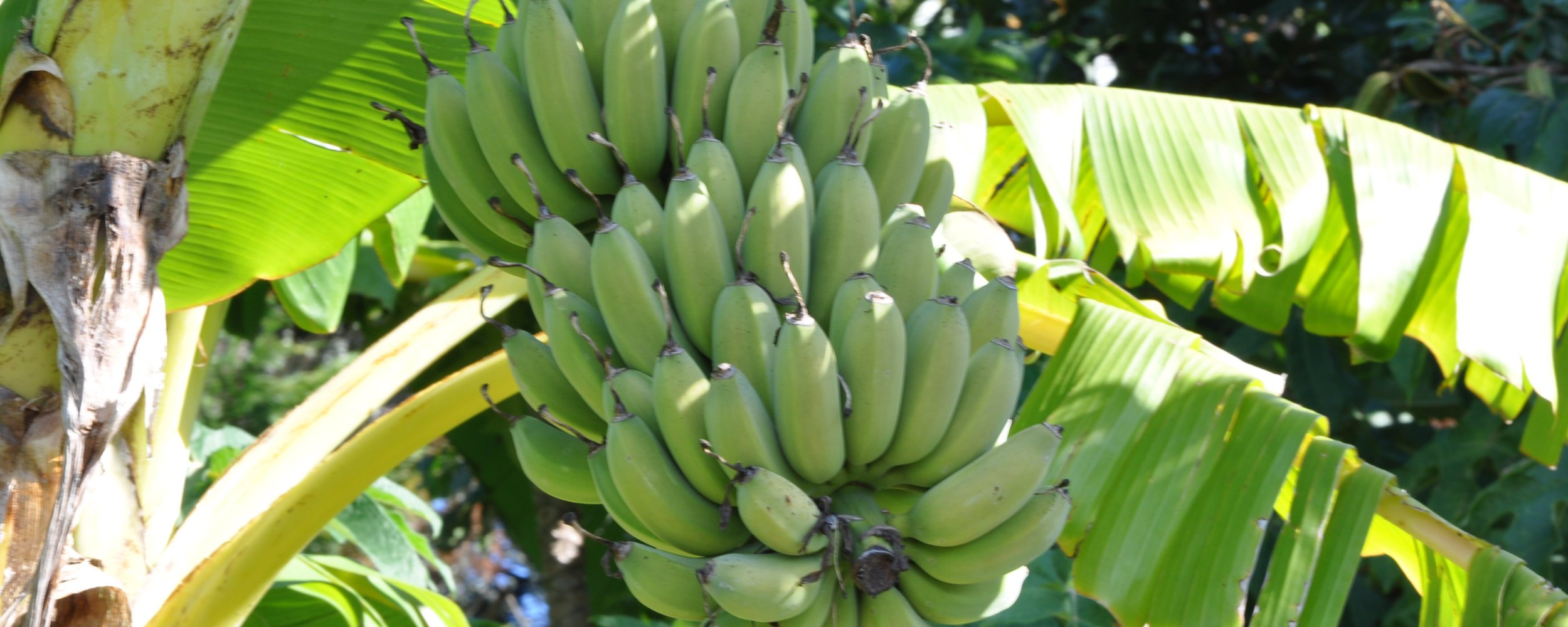
Bananas are very easy to grow. They are vigorous growers, tolerant of drought and poor soils. It will grow to approximately 3-4 meters. Once fully grown, bananas will flower in autumn and produce Bananas for spring. The ideal Banana family is a mother plant with 2-3 daughters.
Incredible Banana
Banana Cavendish Williams has wonderful, luscious tropical leaves it produces large heads of sweet, tasty bananas. They are self-fertile, with the flower stalk appearing out of the centre once the plant is fully grown. It hangs down as the flower develops. The male flower develops at the end of the flower stalk, creating a bell. The female flowers spiral around the stem. The female flowers are white tubular with rich nectar purple bracts and deep red within, banana plants flower in autumn and harvest in spring. Quick growing reaching an approximate height of 3-5m.
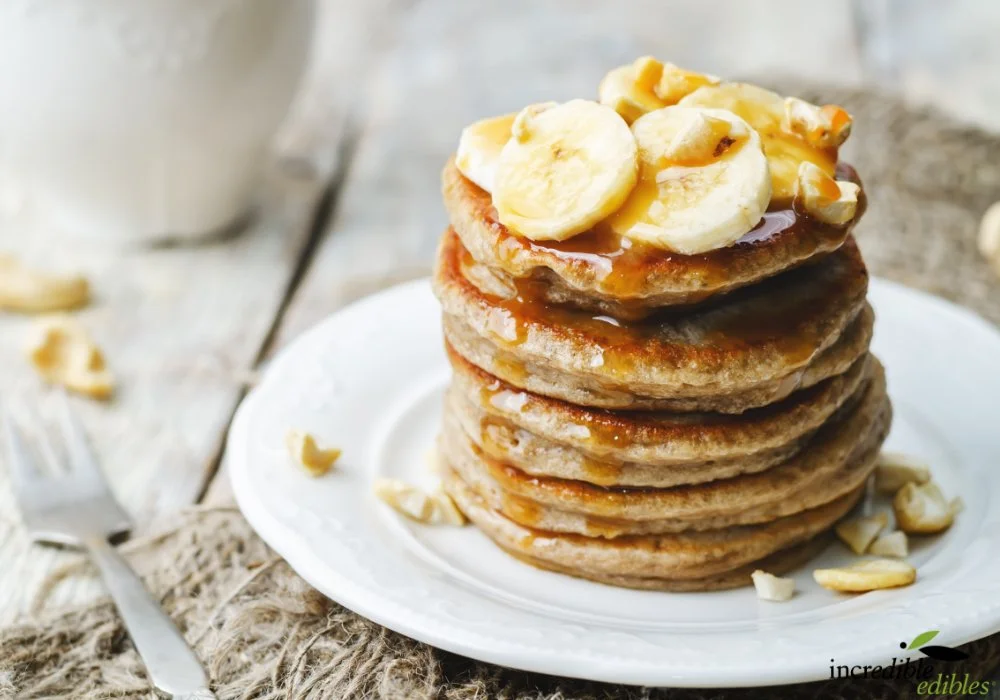
Once a bunch of bananas has developed, remove the bellflower. This will make sure the energy is put into fruit development. Once fruit has set cover fruit with a blue bag leaving the bottom open. Harvest the bunch when fruit are plump but green and hang in a cool shady place or simply let them ripen on the tree and harvest when ready. Delicious in fresh fruit salad, chilled in smoothies, banana splits, and don’t forget those bananas on pancakes for breakfast. Bananas contain good levels of Vitamin C, dietary fibre and potassium
Feed with a high potassium fertiliser in spring and again in summer, providing a good layer of mulch and possibly providing support for the flowers and eventual fruit.
Musa species Cavendish CV Williams
Banana Dwarf Nathan has wonderful, luscious tropical leaves and is ideal for the smaller garden or a large pot, a Cavendish variety that produces deliciously sweet, rich creamy small bananas. They are self-fertile, with the flower stalk appearing out of the centre once the plant is fully grown. It hangs down as the flower develops. The male flower develops at the end of the flower stalk, creating a bell. The female flowers spiral around the stem. The female flowers are white tubular with rich nectar purple bracts and deep red within, banana plants flower in autumn and harvest in spring. Quick growing reaching an approximate height of 2m.
Once a bunch of bananas has developed, remove the bellflower. This will make sure the energy is put into fruit development. Once fruit has set cover fruit with a blue bag leaving the bottom open. Harvest the bunch when fruit are plump but green and hang in a cool shady place or simply let them ripen on the tree and harvest when ready. Delicious in fresh fruit salad, chilled in smoothies, banana splits, and don’t forget those bananas on pancakes for breakfast. Bananas contain good levels of Vitamin C, dietary fibre and potassium
Feed with a high potassium fertiliser in spring and again in summer, providing a good layer of mulch and possibly providing support for the flowers and eventual fruit.
Musa sapientum ‘Dwarf Nathan’
Banana Lady Finger produces heavy bunches of small yellow thin skinned but deliciously sweet with a creamy texture. They are self-fertile, with the flower stalk appearing out of the centre once the plant is fully grown. It hangs down as the flower develops. The male flower develops at the end of the flower stalk, creating a bell. The female flowers spiral around the stem. The female flowers are white tubular with rich nectar purple bracts and deep red within. Quick growing reaching an approximate height of 3-4m.
Once a bunch of bananas has developed, remove the bellflower. This will make sure the energy is put into fruit development. Once fruit has set cover fruit with a blue bag leaving the bottom open. Harvest the bunch when fruit are plump but green and hang in a cool shady place or simply let them ripen on the tree and harvest when ready. Delicious in fresh fruit salad, chilled in smoothies, banana splits, and don’t forget those bananas on pancakes for breakfast. Bananas contain good levels of Vitamin C, dietary fibre and potassium
Feed with a high potassium fertiliser in spring and again in summer, providing a good layer of mulch and possibly providing support for the flowers and eventual fruit.
Musa sapientum ‘Lady Finger’
Banana Red Dacca has wonderful, luscious tropical leaves, and produces heads of very sweet aromatic bananas. Dramatic red coloured fruit with light pink flesh and a slight raspberry-banana flavour. They are self-fertile, with the flower stalk appearing out of the centre once the plant is fully grown. It hangs down as the flower develops. The male flower develops at the end of the flower stalk, creating a bell. The female flowers spiral around the stem. The female flowers are white tubular with rich nectar purple bracts and deep red within, banana plants flower in autumn and harvest in spring. Quick growing reaching an approximate height of 3m.
Once a bunch of bananas has developed, remove the bellflower. This will make sure the energy is put into fruit development. Once fruit has set cover fruit with a blue bag leaving the bottom open. Harvest the bunch when fruit are plump but green and hang in a cool shady place or simply let them ripen on the tree and harvest when ready. Delicious in fresh fruit salad, chilled in smoothies, banana splits, and don’t forget those bananas on pancakes for breakfast. Bananas contain good levels of Vitamin C, dietary fibre and potassium.
Feed with a high potassium fertiliser in spring and again in summer, providing a good layer of mulch and possibly providing support for the flowers and eventual fruit.
Musa acuminata ‘Red Dacca’
Get inspired by homegrown deliciousness
Incredible Experts
Hang out with our experts for a few home-grown tips and tricks.


Banana Blue Java produces small heads of sweet aromatic bananas with a creamy texture and a vanilla flavour with a distinctive aqua-blue colour when ready to harvest. They are self-fertile, with the flower stalk appearing out of the centre once the plant is fully grown. It hangs down as the flower develops. The male flower develops at the end of the flower stalk, creating a bell. The female flowers spiral around the stem. The female flowers are white tubular with rich nectar purple bracts and deep red within. Banana plants flower in autumn and harvest is in spring. Banana Blue Java is quick growing reaching an approximate height of 3-5m.
Once a bunch of bananas has developed, remove the bellflower. This will make sure the energy is put into fruit development. Once fruit has set cover fruit with a blue bag leaving the bottom open. Harvest the bunch once the fruit is plump but aqua-blue and hang it up in a cool shady place to ripen or harvest fruit individually as they ripen on the tree. Delicious in fresh fruit salad, chilled in smoothies, banana splits, and don’t forget those bananas on pancakes for breakfast. Contain good amounts of Vitamin C, dietary fibre and potassium.
Feed with a high Potassium fertiliser in spring and again in summer, providing a good layer of mulch and possibly providing support for the flowers and eventual fruit.
Musa acuminata x balbisiana ‘Blue Java’