Horseradish is a fast growing and hardy perennial, ideal for a container or let it spread through your kitchen garden bed. Grows in partial shade or full sun and is cold and drought tolerant, with large bright green leaves. Prefers an acidic soil. Horseradish have sprays of scented white flowers during the summer months. It grows to approximately 90cm high and 45cm wide.
The tapered white roots is what you use and these are harvested in winter when the plant has died down. There is an improvement in flavour if harvested after frosts. Cut back old leaves when the plant dies down (or in spring when new leaves appear). Grate or cut the roots (Beware of the strong fumes and protect your eyes as may cause eye irritation) and add to salads, sandwiches or make the traditional Horseradish sauce. A little adds the heat and zing to your dish. Use Horseradish raw as it tends to loose much if its flavour when cooked. Horseradish is also used as a sauce (with vinegar and cream or oil) can be pickled or as a powered dried root. Prepared sauces tend to be more stable with fresh roots the strongest flavour.
Culinary techniques: Grate or finely mince immediately before serving to capture the peak pungency. Acid (vinegar or lemon juice) is added to stabilise flavour and preserve the heat. Goes well with Roast Beef, smoked fish cured meats and sausages (just to name a few). Also used in vinaigrettes, dressings, potato salads and as a condiment alongside cheeses. In Eastern European cuisine horseradish is often pared with beetroot or apples.
Roots can be stores in a dark cool place for a period of time, or stored in an airtight container in the fridge for several months. Fresh young leaves can also be used in spring and summer and will add some spice to salads or can be cooked as a leavy vegetable. Horseradish is rich in antioxidants and is antibacterial.
Horseradish is related to Wasabi and Mustard.
Armoracia rusticana
Horseradish is a fast growing and hardy perennial, ideal for a container or let it spread through your kitchen garden bed. Grows in partial shade or full sun and is cold and drought tolerant, with large bright green leaves. Prefers an acidic soil. Horseradish have sprays of scented white flowers during the summer months. It grows to approximately 90cm high and 45cm wide.
The tapered white roots is what you use and these are harvested in winter when the plant has died down. There is an improvement in flavour if harvested after frosts. Cut back old leaves when the plant dies down (or in spring when new leaves appear). Grate or cut the roots (Beware of the strong fumes and protect your eyes as may cause eye irritation) and add to salads, sandwiches or make the traditional Horseradish sauce. A little adds the heat and zing to your dish. Use Horseradish raw as it tends to loose much if its flavour when cooked. Horseradish is also used as a sauce (with vinegar and cream or oil) can be pickled or as a powered dried root. Prepared sauces tend to be more stable with fresh roots the strongest flavour.
Culinary techniques: Grate or finely mince immediately before serving to capture the peak pungency. Acid (vinegar or lemon juice) is added to stabilise flavour and preserve the heat. Goes well with Roast Beef, smoked fish cured meats and sausages (just to name a few). Also used in vinaigrettes, dressings, potato salads and as a condiment alongside cheeses. In Eastern European cuisine horseradish is often pared with beetroot or apples.
Roots can be stores in a dark cool place for a period of time, or stored in an airtight container in the fridge for several months. Fresh young leaves can also be used in spring and summer and will add some spice to salads or can be cooked as a leavy vegetable. Horseradish is rich in antioxidants and is antibacterial.
Horseradish is related to Wasabi and Mustard.
Armoracia rusticana


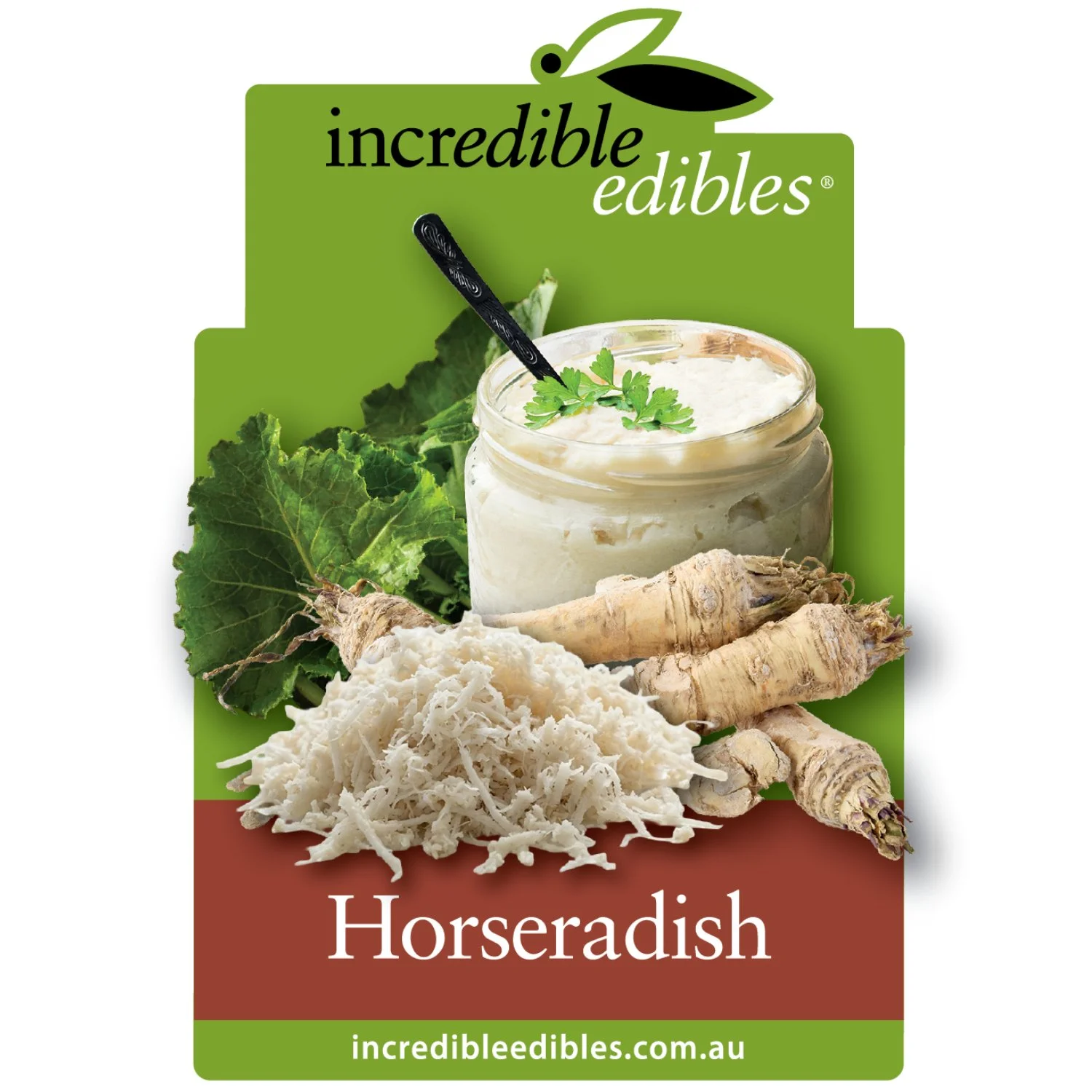 Image 1 of 9
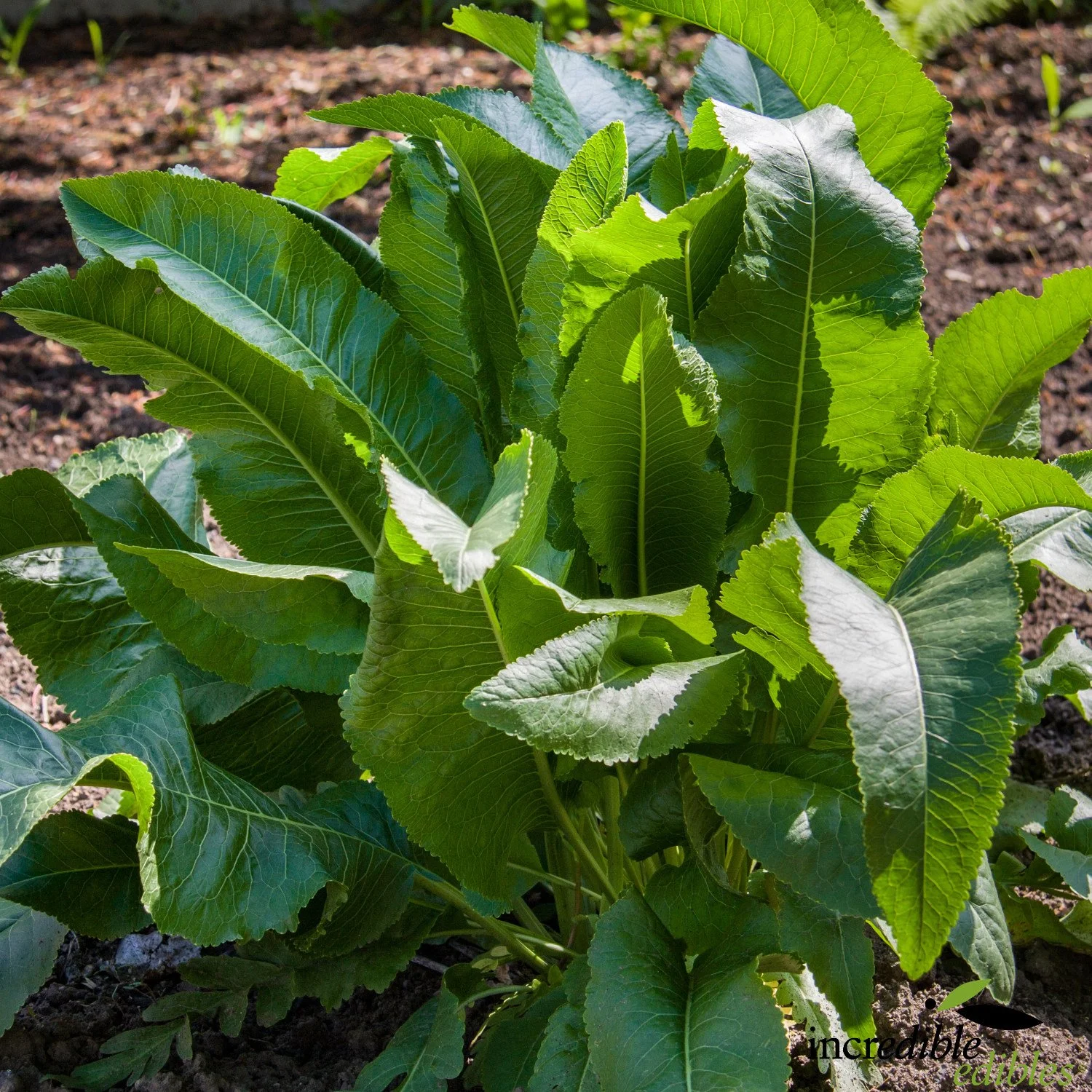 Image 2 of 9
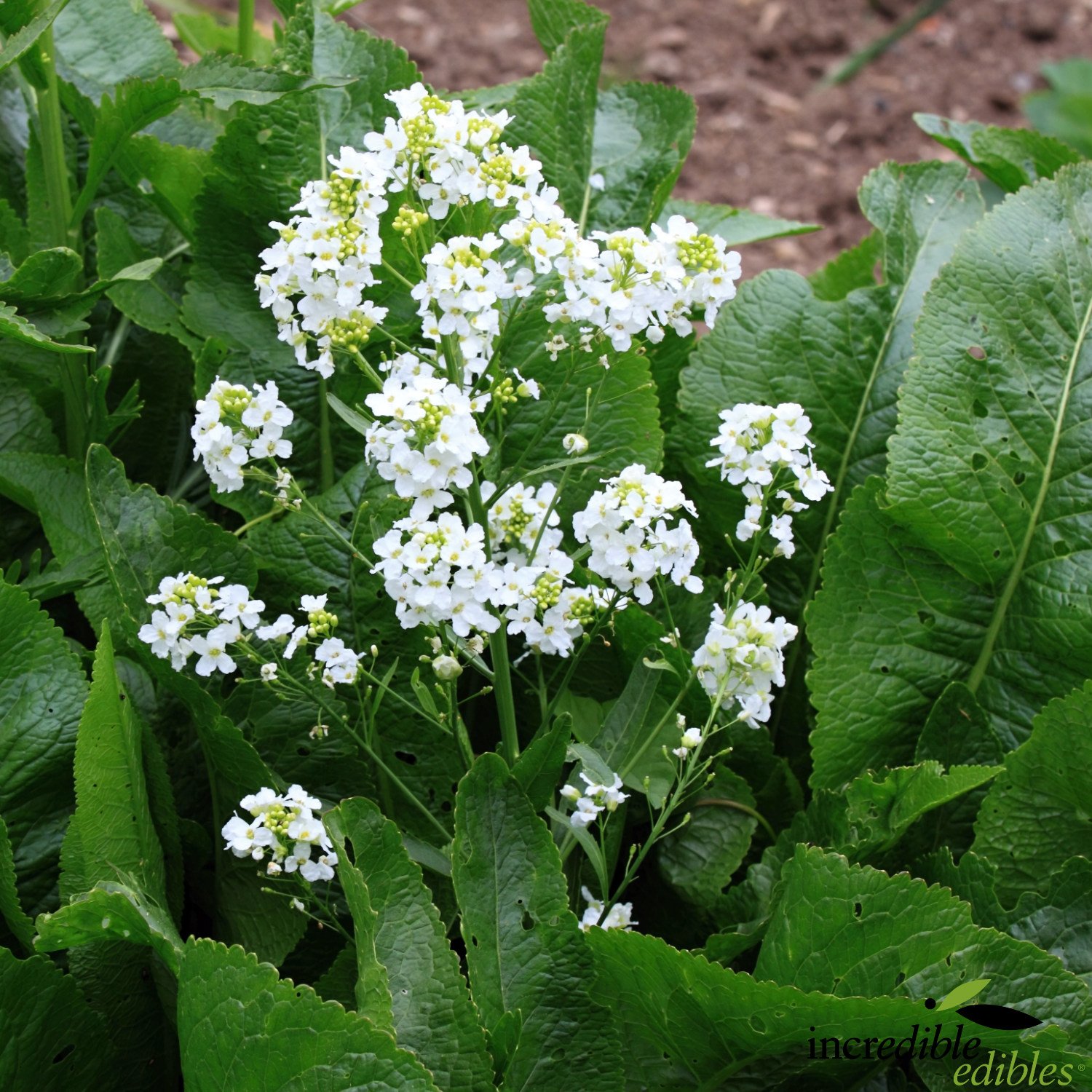 Image 3 of 9
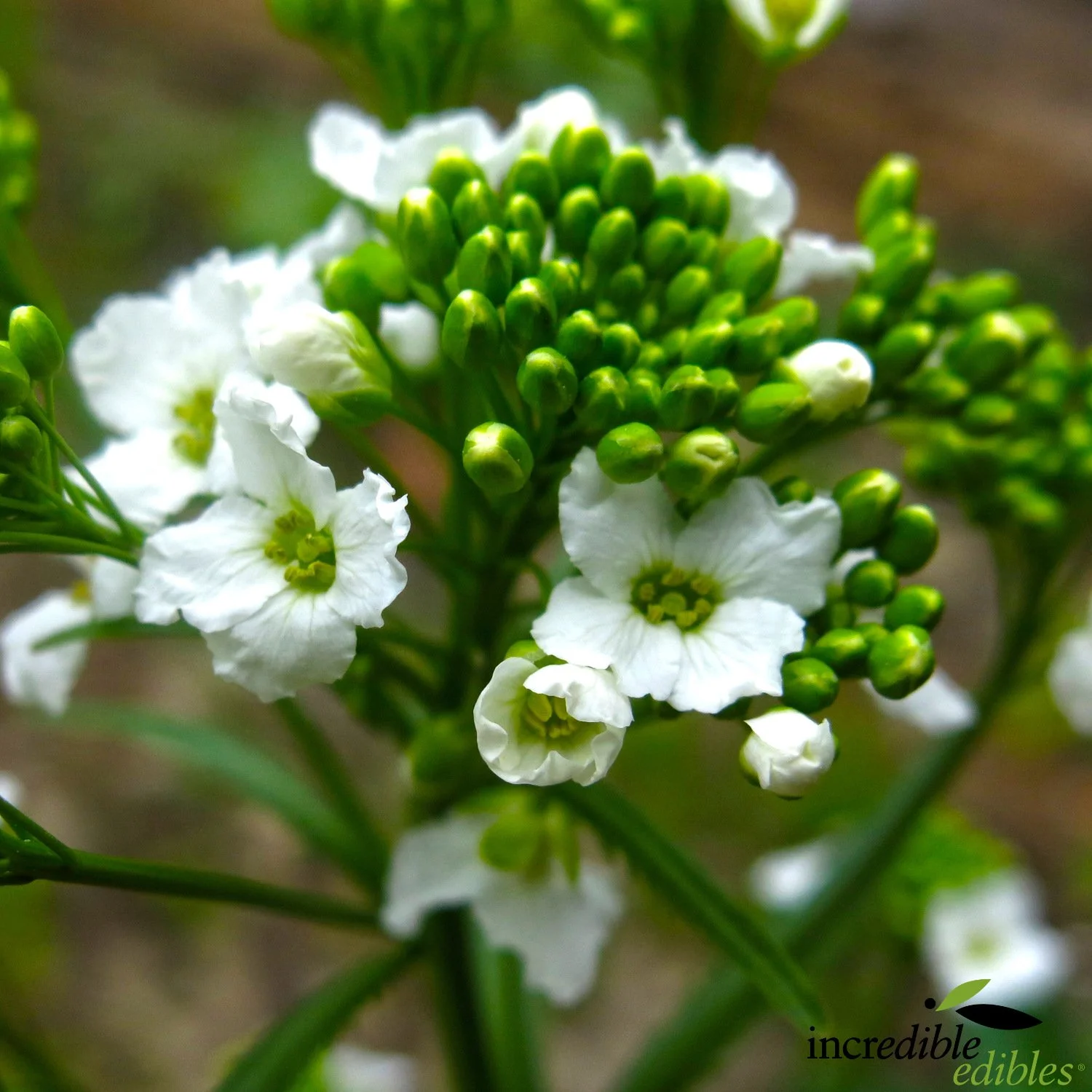 Image 4 of 9
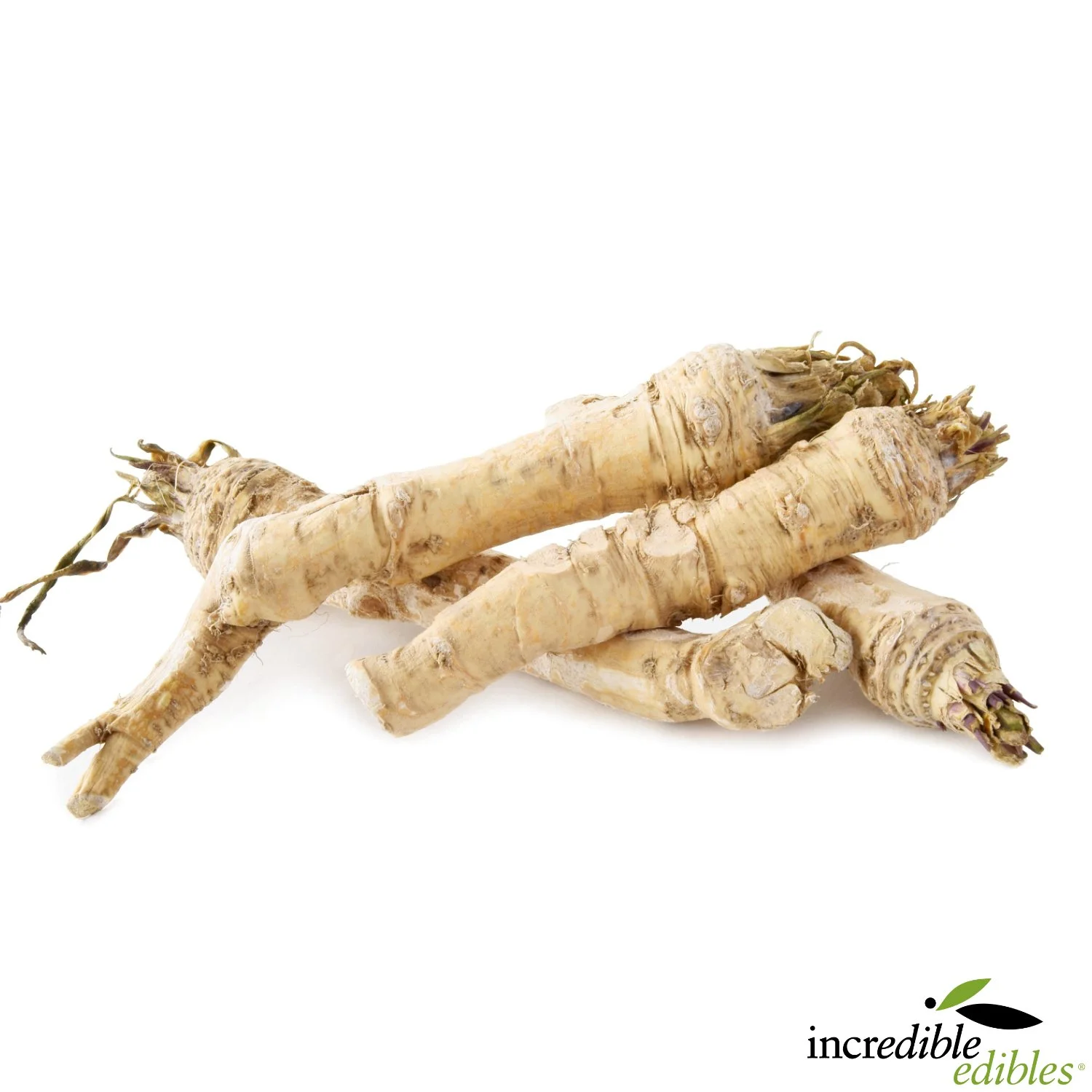 Image 5 of 9
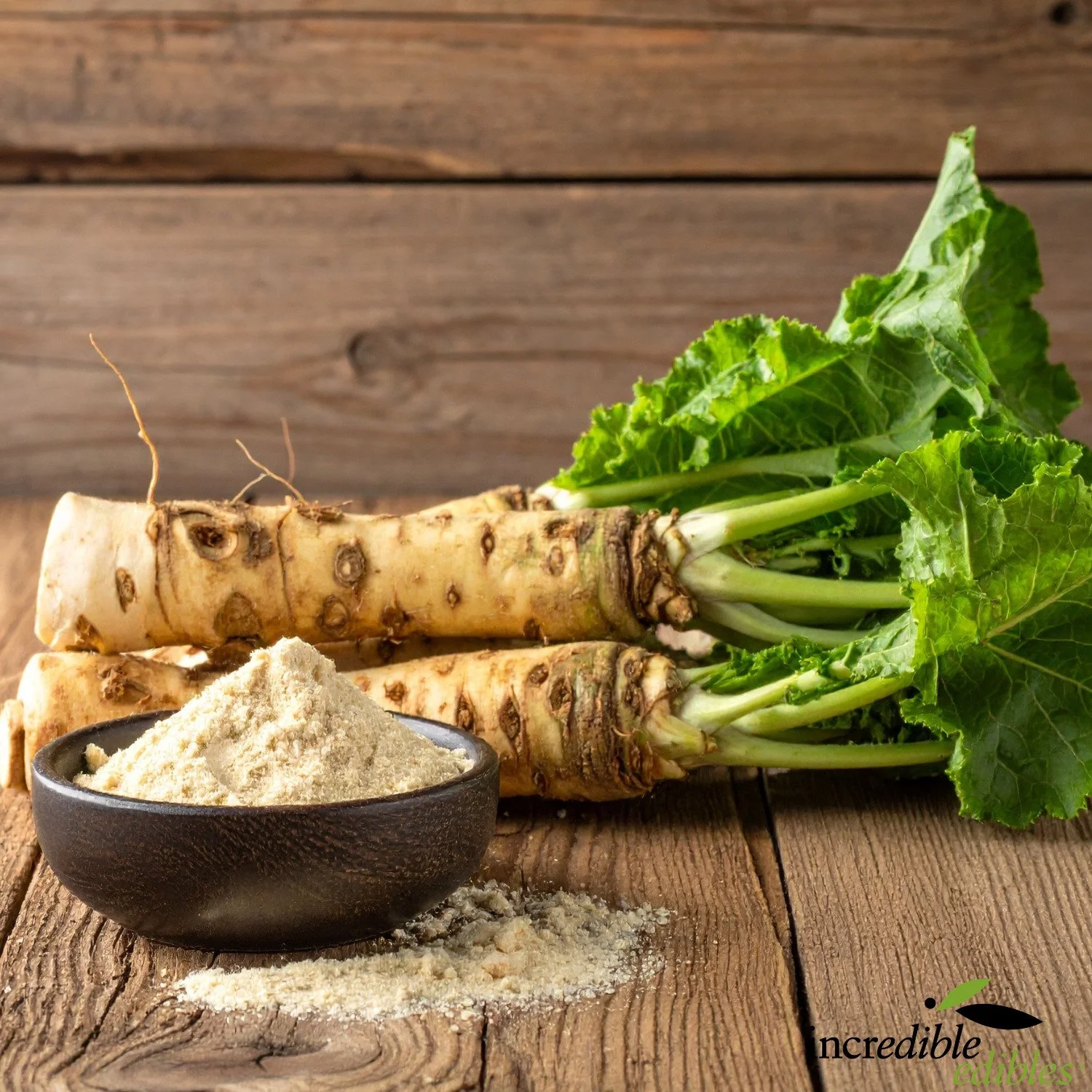 Image 6 of 9
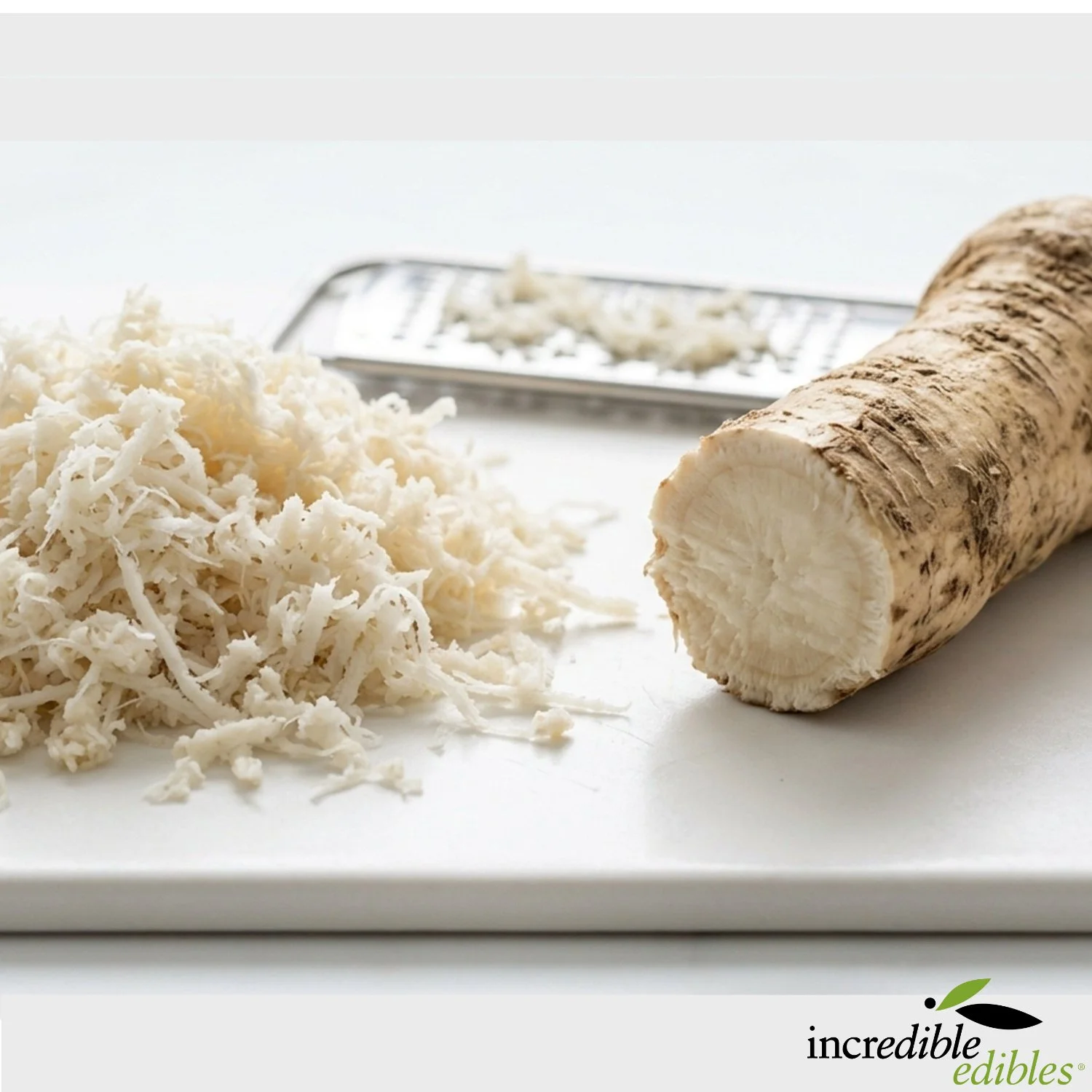 Image 7 of 9
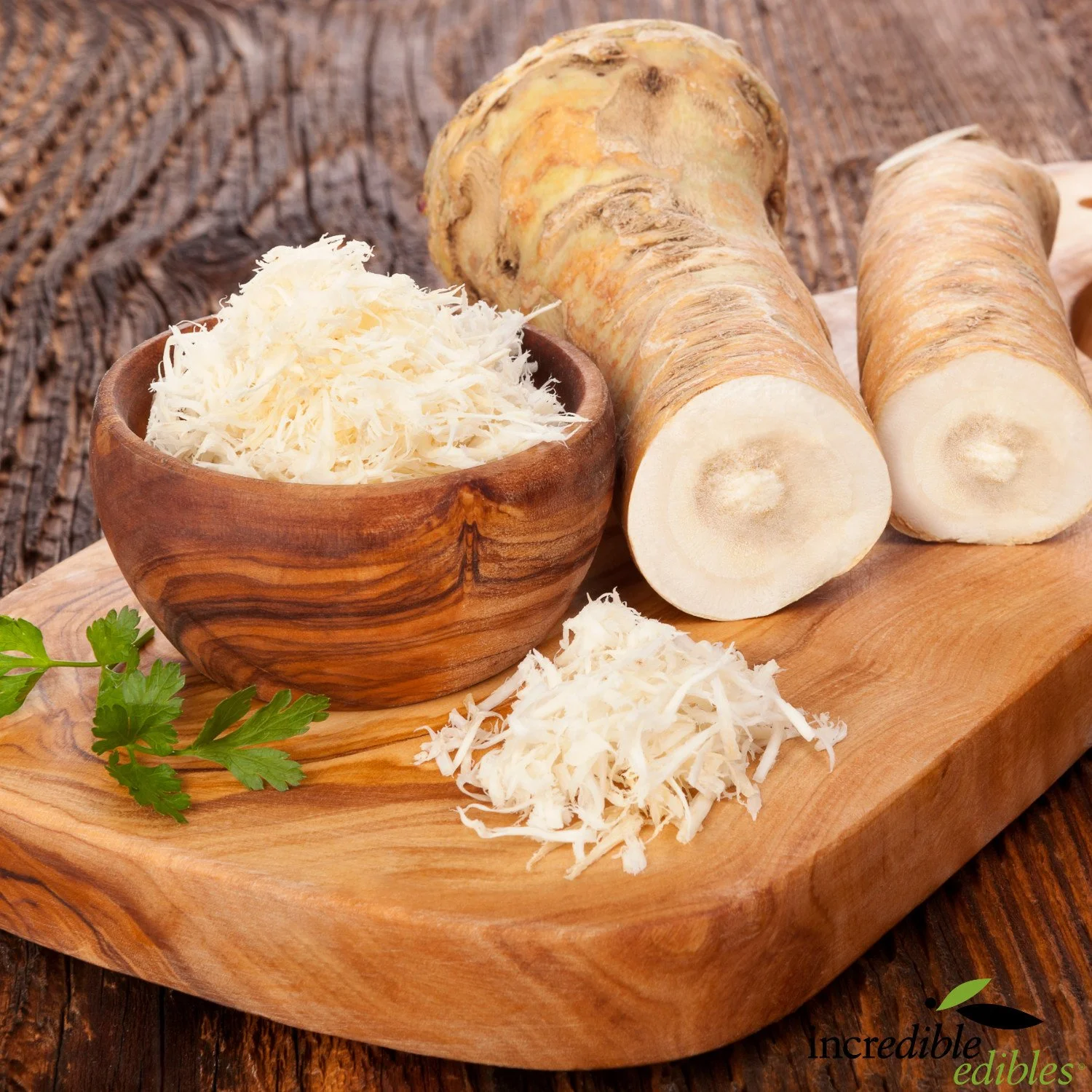 Image 8 of 9
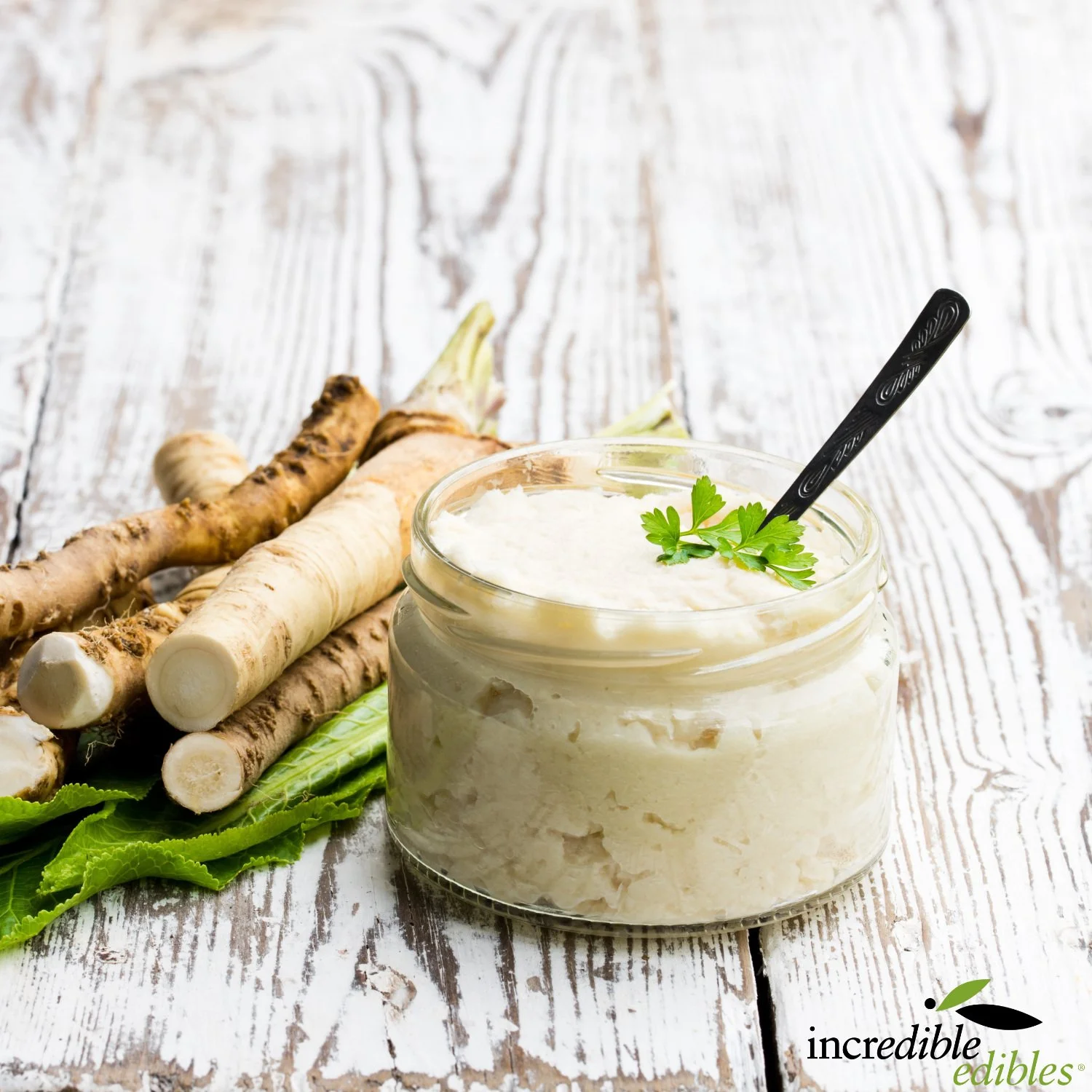 Image 9 of 9